Brewing Guides
Coffee Grind Size: A Simple Guide for Every Brew
Daniel McNair, Head Roaster & Co-Founder · July 3, 2026
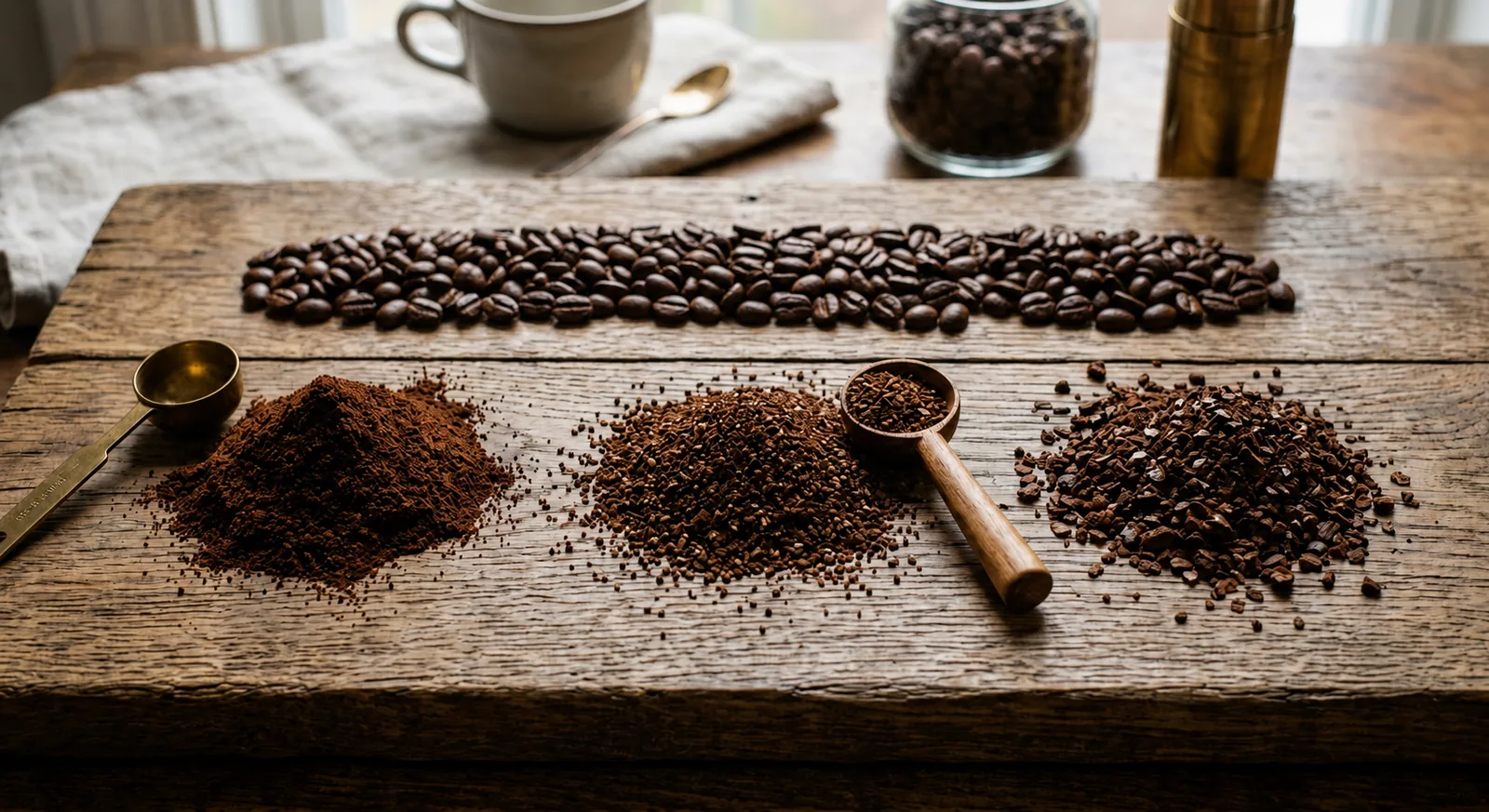
If your coffee keeps tasting bitter or thin no matter what beans you buy, the problem might not be the beans. It might be the grind. Grind size is one of the simplest things to get right, and it changes your cup more than almost anything else. Here is a plain coffee grind size chart by method, along with the why behind it, so you can dial in any brew at home.
Why grind size matters
When you brew coffee, water pulls flavor out of the grounds. That is called extraction. Grind size is how you control the speed of it.
Smaller grounds have more surface area touching the water, so they give up their flavor fast. Bigger grounds have less surface area, so they extract slower. That is the whole idea. You are matching how fast the coffee releases flavor to how long the water is in contact with it.
Get the match right and the cup tastes balanced and sweet. Get it wrong and you taste it right away:
- Too fine for the method runs bitter and harsh. The water pulled out too much.
- Too coarse for the method runs sour and weak. The water did not pull out enough.
So the rule that ties everything together is simple. The longer the water sits with the coffee, the coarser you grind. The faster the water passes through, the finer you grind.
A simple coffee grind size chart by method
Here is the quick reference. Think of grind size on a scale from coarse to fine, and use common kitchen textures as your guide.
| Brew method | Grind size | Looks like |
|---|---|---|
| Cold brew | Extra coarse | Cracked peppercorns |
| French press | Coarse | Coarse sea salt |
| Drip machine | Medium | Regular table salt |
| Pour-over | Medium to medium-fine | Table salt, a touch finer |
| Espresso | Fine | Powdered sugar or flour |
That covers most of what people brew at home. Below is the reasoning for each, grouped by texture.
Coarse: cold brew and French press
These are the slow, full-contact methods. The grounds sit soaking in water for a long time, so they need to give up flavor slowly.
Cold brew is the extreme case. There is no heat to speed things along, just time, usually 12 to 24 hours. Cold water pulls flavor slowly, so you want the coarsest grind you can manage, close to cracked peppercorns. A fine grind would over-extract long before the steep is done and turn the whole batch bitter. Coarse keeps it smooth and clean.
French press is faster than cold brew but still a long soak, usually around four minutes. It uses a metal mesh filter, not paper, so a too-fine grind also leaves sludge in your cup. Aim for the texture of coarse sea salt. A medium roast single origin like our Peru Churupampa, with its dark cocoa, caramel, and ripe plum notes, is a comfortable place to start in a press.
Medium: drip machines and pour-over
This is the most common range, and it is where a lot of home brewing lives. Water moves through the bed of coffee at a steady pace, so you want a grind around the texture of regular table salt.
Drip machines run on their own timing, so medium is a safe default. Pour-over gives you more control, and the grind is the biggest lever you have. Most pour-over brews finish in about two and a half to four minutes depending on size. If your pour-over is draining too fast and tasting weak, go a little finer. If it is clogging and running bitter, go a little coarser. Small steps. We walk through the full method in our guide to pour-over coffee, which pairs grind size with water temperature and ratio.
Speaking of which, two numbers go hand in hand with your grind. Use a ratio around 1:15 to 1:17, coffee to water by weight, and water between 195 and 205 degrees Fahrenheit. Grind sets the speed, while the ratio and temperature round out the cup.
A bright, delicate coffee shines in this range. Our Ethiopian Yirgacheffe, with honey, blueberry, and floral notes, is a favorite for pour-over.
Fine: espresso
Espresso is the opposite of cold brew. Hot water is forced through a tightly packed puck of coffee under pressure in about 25 to 30 seconds. That is a very short contact time, so you need a lot of surface area to extract enough flavor fast.
That means a fine grind, close to powdered sugar or flour. Espresso is also the most sensitive method to grind size. A tiny change throws off the shot more than it would in any other brew, so espresso folks adjust their grind constantly to keep shots dialed in.
Slow brews want a coarse grind. Fast brews want a fine grind. Once that clicks, the chart takes care of itself.
Burr grinder vs. blade grinder
Grind size only helps if your grind is even. This is where the tool matters.
A burr grinder crushes beans between two surfaces to a consistent size you can set. That evenness is what gives you an even extraction, where most of the grounds finish at the same time. A blade grinder, the kind with a spinning propeller, chops beans unevenly. You end up with fine dust and big chunks in the same batch. The dust over-extracts and goes bitter while the chunks under-extract and go sour, in the same cup.
If you are going to upgrade one piece of gear, make it a burr grinder. It will do more for your coffee than a fancier brewer.
Grind fresh, and keep it whole until you brew
Here is the thing about grinding. The moment you grind a bean, you expose all that fresh surface area to air, and the coffee starts going stale faster. Whole beans hold their flavor much longer than ground coffee does. That freshness gap is a big part of why fresh-roasted beats grocery-store coffee.
So for the best cup, grind right before you brew. We offer every coffee as whole bean or ground, and plenty of folks pick ground for the convenience. That is a fine choice. If you do go ground, store it airtight in a cool, dark spot away from heat and moisture, do not refrigerate it, and use it within a couple of weeks. We get into the details in our guide on how to store coffee beans.
One more note while we are talking freshness. Coffee tastes best in a window of roughly 3 days to a month off roast for drip and pour-over, and it holds up longer than that in an airtight container. Espresso usually likes a few extra days to settle after roasting. We ship the same week we roast in small batches here in Arkansas, so it reaches you inside that window with plenty of time to spare.
Put it together
You do not need to memorize microns. Just remember the order. Cold brew and French press coarse, drip and pour-over medium, espresso fine. Match the grind to how long the water is in contact with the coffee, keep your beans fresh, and you will taste the difference in the next cup.
If you want consistently fresh coffee to practice on, our monthly subscription ships freshly roasted beans to your door, whole bean or ground, and saves you 10 percent. You can pause or cancel anytime. Our profits go to fund Gospel outreach to people who have never heard the Good News, which is the whole reason we roast. If you would rather grab a single bag first, browse our coffees and start with the method you brew most.
Common questions
What grind size should I use for each brew method?
Match the grind to contact time. Use a coarse grind for French press and cold brew, a medium grind for drip machines and pour-over, and a fine grind for espresso. The longer water sits with the coffee, the coarser you want the grind so it does not over-extract.
Why does coffee grind size matter so much?
Grind size controls how fast water pulls flavor out of the coffee. Finer grounds have more surface area and extract faster, while coarser grounds extract slower. Get it wrong and you taste it. Too fine for the method runs bitter, and too coarse runs sour and weak.
What grind is best for cold brew?
Cold brew wants the coarsest grind you have, close to cracked peppercorns. Because cold water steeps for 12 to 24 hours, a fine grind would over-extract and turn bitter. A coarse grind lets the water pull flavor slowly and cleanly over that long steep.
Can I grind my coffee ahead of time?
It is better not to. Ground coffee goes stale fast because more surface area is exposed to air. For the best cup, grind right before you brew. If you order ground from us, store it airtight in a cool, dark spot and use it within a couple of weeks.
Do I need a burr grinder?
A burr grinder helps a lot. Burrs crush beans to a consistent, even size, which gives you an even extraction. Blade grinders chop unevenly, leaving dust and chunks in the same batch, so part over-extracts while part under-extracts. If you only want one upgrade, make it a burr grinder.